Have you ever seen your child’s eyes sparkle at the thought of racing a go kart? That thrill of adventure is hard to beat. Electric go karts for kids are gaining popularity as parents seek safe, exciting, and eco-friendly outdoor activities. These battery-powered vehicles offer a modern spin on traditional go karting, blending fun with sustainability. But, like any ride-on toy, they have both benefits and drawbacks. This article dives into the pros and cons of electric go karts for kids, offering context, data, and practical advice to help you decide if they’re right for your family. We’ll explore their eco-friendly design, safety features, and limitations like battery life. Keep reading to learn how electric go karts for kids can spark joy while prioritizing safety.
What Are Electric Go Karts for Kids?
Electric go karts for kids are battery-powered vehicles designed for children, delivering the excitement of racing karts with a focus on safety and simplicity. Unlike gas-powered models, they run on rechargeable batteries, using electric motors for power. This makes them perfect for backyard fun, driveways, or even indoor playground tracks.
These karts often include adjustable speeds, safety harnesses, and sturdy frames to suit growing kids. Popular for ages 3 to 14, they encourage physical activity and coordination.
Parents love how these karts introduce motorsports without the noise or fumes of gas models. Understanding their components, like lithium-ion batteries and brushless motors, is key to choosing wisely.
History and Evolution of Kids’ Go Karts
Go karts began in the 1950s as DIY racers, becoming commercial toys by the 1970s. Electric versions surged in the 2000s with better battery technology. In 2025, models boast features like app-controlled speed limits.
Today’s designs cater to various skill levels, from basic pedal hybrids to advanced drifters, making them a family favorite.
Key Components and How They Work
The core of an electric go kart is its battery, typically 24V or 36V, powering a motor that drives the wheels. Controls are straightforward: a pedal for acceleration and brakes for stopping. Safety features include automatic shut-offs and low-speed modes.
Some models use regenerative braking to extend battery life. Maintenance is simple, involving charging and occasional tire checks, unlike gas engines.
Knowing these basics helps parents evaluate durability. Brushless motors, for example, offer efficiency and less wear over time.
The Pros of Electric Go Karts for Kids
Electric go karts for kids excel in several areas, making them a top choice for families. Their design balances fun with responsibility. Let’s explore the key advantages.
Eco-friendliness stands out. These karts produce zero emissions, unlike gas models that emit pollutants. This aligns with parents’ growing environmental consciousness.
They’re also quiet, allowing for peaceful play in neighborhoods. No loud engines mean less disturbance for everyone.
Thinking about Electric Go-Karting for Kids? Experience the thrill today!
Safety Advantages Over Traditional Options
Safety is critical for kids’ toys. Electric go karts often feature adjustable speed settings, letting parents cap speeds based on a child’s age and skill.
They lack hot exhaust pipes or fuel risks, reducing burn hazards. Features like seat belts and roll bars enhance protection.
Indoor electric karting venues report fewer incidents due to controlled settings and no fumes, highlighting their safety edge.
Environmental and Cost Benefits
Going green saves money. Electric karts eliminate fuel costs, with charging costing mere cents per session.
They need less maintenance—no oil changes or spark plugs. This reduces long-term expenses and waste.
For families, this means more playtime and less hassle, while teaching kids about sustainability.
Fun and Educational Aspects
These karts are more than toys; they’re learning tools. Kids develop hand-eye coordination, spatial awareness, and even basic physics knowledge while driving.
They encourage outdoor activity, countering screen time. Parents report increased confidence in kids who master karting.
With drifting or racing modes, they spark creativity, blending play with real-world skills.
- Eco-Friendly Operation: Zero emissions for cleaner air.
- Low Noise Levels: Perfect for residential areas.
- Ease of Use: Simple controls for beginners.
- Adjustable Features: Grows with your child.
- Health Benefits: Promotes physical activity.
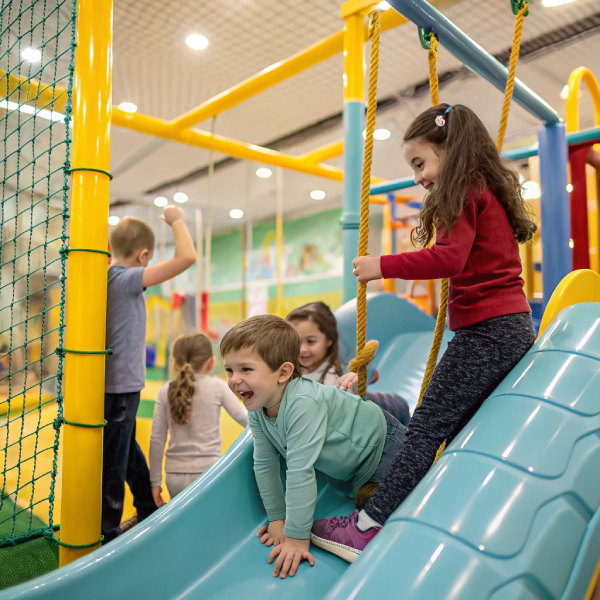
An indoor playground provides the perfect venue for families seeking a safe and exciting activity for their children. Electric go-karts offered in these covered facilities have numerous advantages, including zero emissions and reduced noise levels that make them ideal for indoor environments. Children can enjoy a safe and controlled driving experience in a modern indoor playground while parents appreciate the clean and comfortable surroundings. These facilities typically feature standard safety equipment and professional supervision, ensuring peace of mind for parents while their kids have fun.
The Cons of Electric Go Karts for Kids
Despite their appeal, electric go karts for kids have limitations. Knowing these ensures realistic expectations. Not every model fits every scenario.
Battery life is a frequent concern. Runtime ranges from 30 minutes to a few hours, potentially interrupting play.
Charging can take 4-8 hours, requiring planning ahead, which may frustrate spontaneous fun.
Performance Limitations Compared to Gas Models
Electric karts may lack the power of gas models. Kids’ versions typically max out at 8-15 mph, compared to 20+ mph for gas.
They struggle on rough terrain or slopes due to lower torque. This makes them better for flat surfaces.
For thrill-seekers, this might feel limiting, though it’s a safety trade-off.
Upfront and Maintenance Costs
While maintenance is low, motor wear or part shortages can occur. Not all components are locally available.
Budgeting for these is crucial. Checking warranties helps reduce risks.
Potential Safety Concerns
Accidents can still happen. High speeds on uneven ground risk flips or collisions.
Wet conditions reduce traction, increasing slip risks. Supervision is essential.
Over-relying on electric features might skip teaching basic safety habits.
- Limited Runtime: Play may end abruptly.
- Charging Delays: Not suited for instant fun.
- Terrain Restrictions: Best on smooth surfaces.
- Higher Initial Cost: Premium for electric tech.
- Battery Degradation: Performance fades over time.
Electric vs. Gas Go Karts: A Comparison for Kids
Choosing between electric and gas go karts for kids involves balancing performance, upkeep, and safety. Electric models lead in eco-friendliness and safety, while gas offers endurance. Here’s a breakdown.
Electric karts produce no emissions, making them ideal for indoor use. Gas karts provide longer runtime without needing recharges.
Electrics have lower operating costs but higher upfront prices. Gas requires fuel and more maintenance.
Performance and Speed Differences
Gas karts often reach higher speeds and handle off-road better due to engine power. Electrics offer instant torque for quick starts but cap at safer speeds.
For kids, electrics’ adjustable speeds prevent over-acceleration. Gas models can be harder to control, requiring more skill.
Electrics suit paved areas; gas excels on dirt tracks.
Maintenance and Environmental Impact
Electric maintenance is minimal—no fuel mixing or exhaust cleaning. Gas models need regular tune-ups and oil changes.
Environmentally, electrics win with zero pollutants. Gas contributes to air quality issues, especially indoors.
Electrics align with sustainable trends for long-term benefits.
Which Is Better for Your Child?
It depends on your needs. For urban, supervised play, electric is ideal. For rural adventures, gas might work better.
Younger kids benefit from electric’s safety controls. Consider age, budget, and space.
Testing models helps ensure the right fit for your child.
| Aspect | Electric Go Karts | Gas Go Karts |
|---|---|---|
| Emissions | Zero | High (CO2, fumes) |
| Noise Level | Low | High |
| Maintenance | Low (battery checks) | High (oil, fuel) |
| Runtime | 30min-3hrs | Unlimited with fuel |
| Top Speed for Kids | 8-15 mph | 15-25 mph |
| Cost | Higher initial, low operating | Lower initial, higher operating |
| Safety Features | Adjustable speeds, no hot parts | Basic, potential burn risks |
This table summarizes key differences to guide your decision.
How to Choose the Best Electric Go Kart for Your Child
Selecting the right electric go kart means evaluating your child’s age, skill, and play area. Look for safety certifications like ASTM standards. Read user reviews for real-world insights.
Ensure the kart fits your child, with adjustable seats for growth.
Factors to Consider: Age, Speed, and Battery Life
Age matters. For 3-8 year olds, choose karts with max 8 mph speeds, like entry-level models.
Older kids (9-14) can handle 12-15 mph, such as drifter-style karts.
Aim for at least 45 minutes of battery life. Check charging speed for convenience.
Smooth tires work for pavement; knobby tires handle light off-road.
Top Electric Go Karts for Kids in 2025
Here are top models based on recent reviews.
- Segway Ninebot Gokart Pro 2: Ages 14+, up to 26.7 mph, 15.5 miles range. Features app control, drifting modes. Pros: Versatile, exciting. Cons: Heavy, expensive. Ideal for teens.
- Razor Ground Force Elite: Ages 13+, 14 mph, 40 minutes runtime. 36V battery, forward/reverse. Pros: Durable, easy controls. Cons: Short battery.
- Blitzshark 24V Kids Go Kart: Younger kids, dual 150W motors, adjustable frame. Pros: Grows with child, drift mode. Cons: Limited speed info.
- MotoTec Mud Monster 48V: Ages 13+, 10-20 mph, off-road tires. Pros: Rugged, full suspension. Cons: Needs assembly. Great for adventure.
- Radio Flyer Ultimate Go-Kart: Ages 3-8, 5-11 mph, 45 minutes. Pros: Three speeds, parent lock. Cons: Not off-road. Budget-friendly.
Actionable Tips for Purchasing
Look for 1-2 year battery warranties. Buy from reputable retailers.
Check user feedback for performance insights. Consider accessories like extra batteries.
Visit stores for hands-on tests. Prioritize karts with included safety gear.
Safety Tips for Using Electric Go Karts for Kids
Safety turns fun into worry-free play. Always supervise kids while they ride. Teach rules like avoiding sharp turns at high speeds.
Use helmets, knee pads, and closed-toe shoes. Regular checks prevent issues.
Avoid wet conditions to reduce slip risks.
Essential Gear and Precautions
Certified helmets are a must. Elbow and knee pads cushion falls.
Choose karts with seat belts and kill switches.
Pre-ride checks: Ensure tires are inflated, batteries charged, and brakes functional.
Set clear boundaries, keeping karts away from traffic.
Common Mistakes to Avoid
Don’t ignore age limits—too-fast speeds risk injury.
Avoid modifying karts to boost speed unsafely.
Neglecting maintenance causes failures. Schedule regular inspections.
Limit to one rider per kart to prevent overcrowding.
Teaching Kids Responsible Riding
Start with low-speed modes for beginners.
Explain risks of reckless driving.
Encourage turn-taking to build social skills.
Model safe habits yourself.
Hosting a birthday celebration in birthday party rooms equipped with electric go-karts has become one of the most popular choices for families. These dedicated spaces offer amenities that go beyond a typical party, allowing children to create unforgettable memories with their friends while racing electric go-karts. Birthday party rooms usually include special packages, decorations, and various entertainment programs that cover all aspects of the celebration. These spaces are not only exciting for children but also convenient for parents, as all party details are professionally managed from start to finish.
FAQs About Electric Go Karts for Kids
What is the best age for kids to start using electric go karts?
Most suit ages 3-14, with adjustable speeds. Start young kids on low-power models.
How long do batteries last in kids’ electric go karts?
Typically 30-90 minutes, based on model and use. Higher-voltage batteries last longer.
Are battery-powered go karts for children safer than gas ones?
Yes, with no fumes, adjustable speeds, and fewer hot parts.
What are maintenance tips for electric go karts?
Charge after use, clean regularly, check connections. Avoid overcharging.
Can electric go karts for kids be used indoors?
Many are quiet enough for indoor tracks, but ensure space and ventilation.